By Sam Kioni Roberts – Artistic Director
Many can and have asked why theatre is written, performed and watched. Many solutions have been proposed- that it is educational, purely for entertainment, allows for reflection and provokes thought. That it inspires revolutions, or quashes them. That it captures reality, or distances itself from it. Something that has so many ‘whys’ is quite possibly impossible to define in those terms. Therefore, perhaps a better question is ‘when?’. All of the above have great importance when applied to a particular moment in time. Art is educational only in relation to the time it is being seen and absorbed, and entertains only when the material is appropriate to its audience. Thought, reflection and political consideration apply to the moment, and reality is relative to time itself. This could all be seen to be self-evident, so then why are we so obsessed with telling and re-telling the same old stories?
William Shakespeare’s canon is continually staged and re-staged around the world, as are works by Sheridan, Wilde, Bernard-Shaw, Miller and many many others across time. Even ancient Greek and Roman playwrights find their works produced in 2019. Is this credible, that we should find all the whys behind watching theatre being answered by stories that seemingly have no relevance to our modern society? I think that we all have some idea of the answer to that, but can sometimes find it difficult to put it into words.
Perhaps the clearest example of why so-called ‘old’ stories still have huge relevance can be seen in Baz Luhrmann’s 1996 Romeo + Juliet, a film version of Shakespeare’s classic of the same name. The story of the tragic young star-crossed lovers is shown in a modern setting, but with Shakespeare’s own language still being used, albeit in a slightly cut and edited form. Many other so called ‘teen’ adaptations of Shakespeare followed it. The updates in terms of setting were in place to improve accessibility for modern mass audiences, and especially younger generations, maximising this by using references to contemporary popular culture and the current political climate. Many seek to update the stories of classic theatre in a way which entices people unfamiliar with the plays to see them, allowing them to enjoy and really immerse themselves in the experience.

But the question still remains, why? We cannot forget, with a question like this, that interpretation is something that is individual, belonging to anyone who watches, reads or listens.
That said, modern audiences must be permitted the opportunity to interpret these stories in their own way. It is vital that these stories are told, and that they continue to inspire and entertain, even when the story has been seen by some audiences before. New, vibrant and relevant productions of classic plays provide comfort for audiences by telling stories (like myths, fables or fairy-tales) with which they may already be familiar- but then complicate and direct them in such a way which presents a challenge to audience members’ ideas about the story they thought they knew, allowing the tale to remain thought provoking, entertaining and educational.
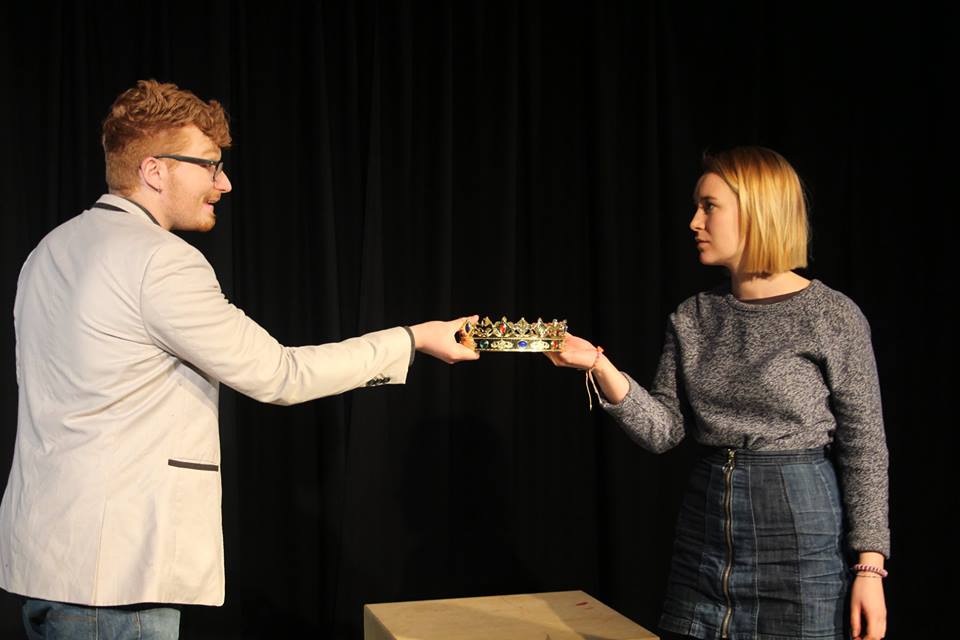
This is what I sought to do when writing, directing and performing The Anointed King in early 2018. As a theatre-maker my challenge to Shakespeare’s Richard II would primarily be a temporal one in light of modern political parallels with today’s dictators, shaky democracies and cults of personality which specialise in backstabbing, betrayal and coups. I wanted to keep the viewer’s attention fixed on the storyline and on the very human, very real nature of the characters depicted. They would not simply be paintings, or stained-glass effigies of historical characters, rather they would be people with whom an audience member could immediately associate a memory, an acquaintance or even a well-known public figure. I certainly didn’t wish to both introduce an audience to the play and cement their interpretation of it with the same performance, but it struck me as important that a story which had so affected me be presented theatrically to audiences who had not been exposed to it.
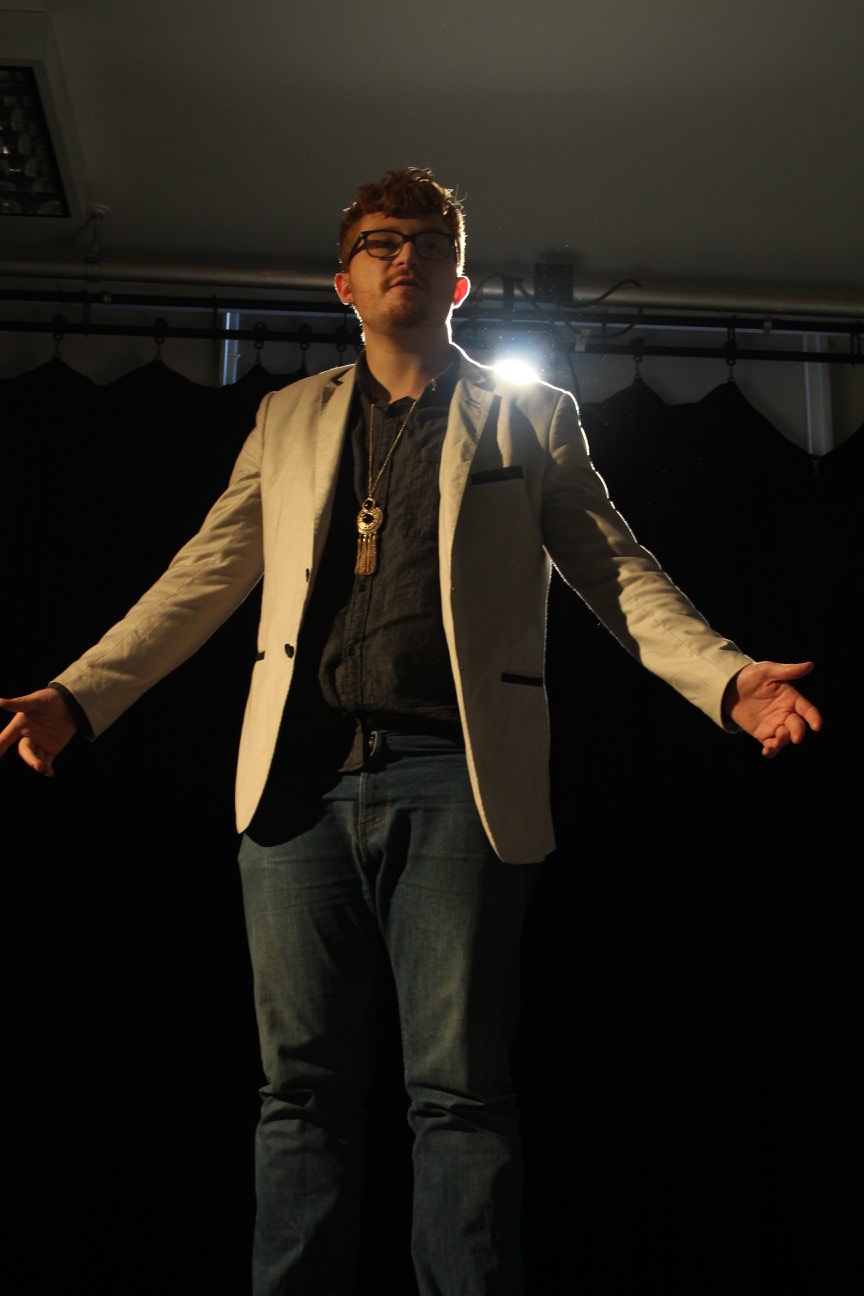
No-one, however, would claim that The Anointed King and a more traditional and relatively un-edited production of Richard II were at all similar…
Indeed I wanted to free Richard II from the burden of re-presenting history and to make something fiercely political and critical in tone, with direct allusion to recent political history. This is something that is done quite frequently, however in productions of classic plays. Updating the context and setting of classic plays in order to maximise accessibility is done because meaning, whilst being subjective, is unlimited and never-ending, it changes over time- especially when informed by the past. How else is the past meant to be properly educational unless it is relayed to audiences? All the better if it can be done in an easily accessible, entertaining way.
As said before, classic literature and art can become almost mythical in nature, becoming a canon of stories and cultural reference points for people living in an ever-changing society, informing them of their past and helping to formulate their future. Different interpretations should be encouraged, not forced, but rather enabled, allowing art to be an educational medium without the need for the creator/ director/ performer to act as any kind of teacher. If we see classic theatre and art as modern myth, even at the point of their inception, even if this was not the intention of their creator, then we see their continual performance and absorption by audiences as being an imitation upon which people have patterned themselves throughout history. Therefore, classic plays, literature and art should never be allowed to die, but should be celebrated and repeatedly enjoyed, as they thankfully are, and will be for as long as humans roam the Earth.
 Windfall Theatre and Arts Blog